Correct piercing post length affects comfort, appearance and the space available for normal tissue changes. A post that is too short may press into the skin; one that is too long may snag, tilt or move excessively. This guide explains the terms so you can have a better sizing conversation with your piercer.
AURIVNA sensitive-skin note: Our jewelry is hypoallergenic and designed for sensitive skin. We label 925 sterling silver and titanium styles by their actual material so shoppers can choose confidently. Individual sensitivities can still vary, and a professional piercer should confirm jewelry for a fresh or actively healing piercing.
Post Length vs Gauge
Post length is the wearable distance between the front decoration and the back of the jewelry. Gauge describes the thickness of the post. They are separate measurements, and both must match the piercing. For rings, the key dimension is usually the inside diameter.
Why You Should Not Guess
Two people with the same placement may need different lengths because cartilage thickness, piercing angle and swelling allowance differ. Product photos cannot show the wearable length you need. If the piercing is new, irritated or difficult to access, ask a qualified piercer to measure it.
How a Healed Flatback Post Is Measured
- Remove the jewelry only if the piercing is fully healed and removal is comfortable.
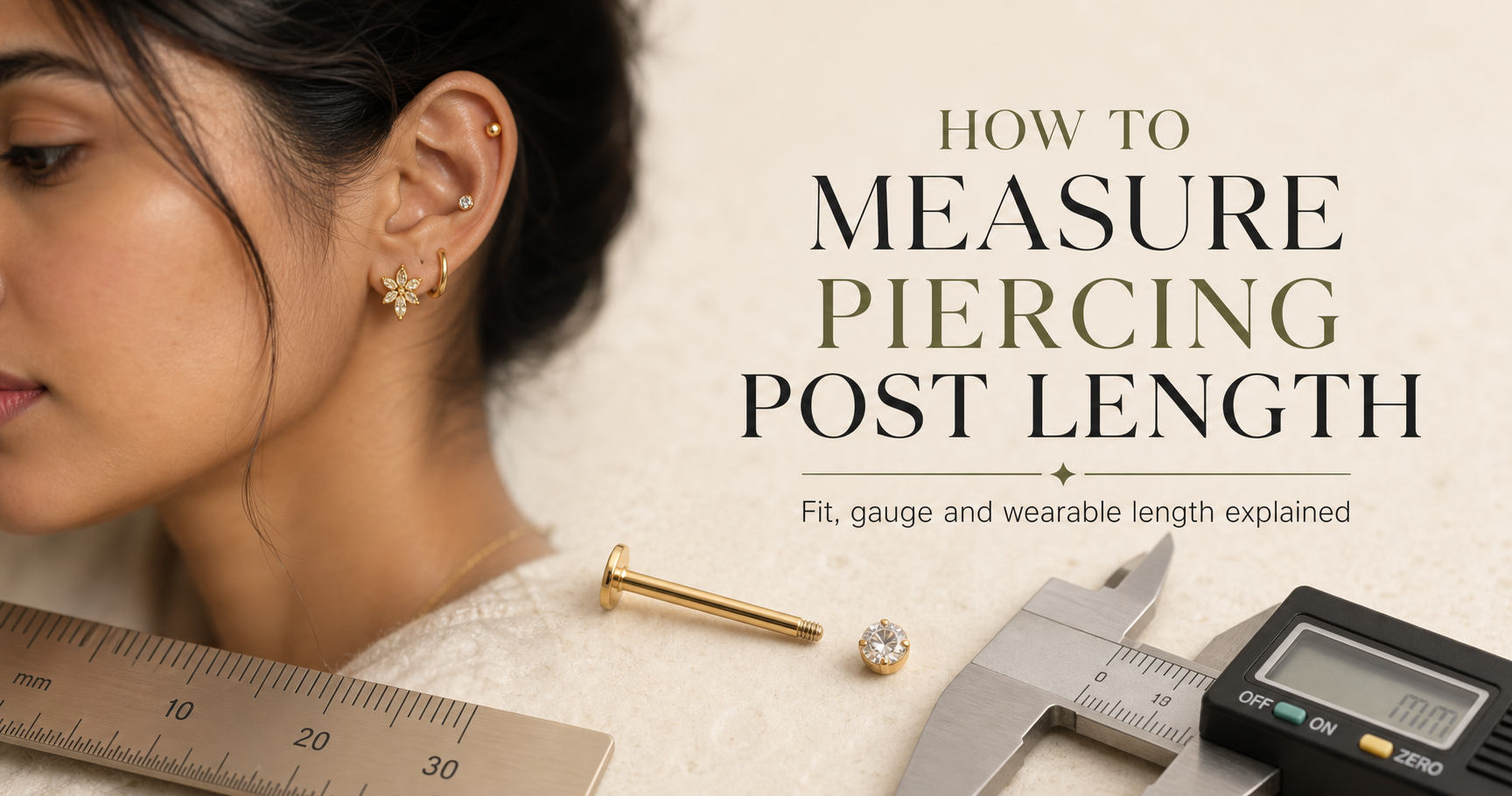
- Place the post beside a millimeter ruler or digital caliper.
- Measure the wearable shaft from the underside of the front setting to the inside face of the flat disc.
- Do not include decorative fronts, threadless pins or the backing disc thickness.
- Record gauge and thread style separately.
A professional caliper is more reliable than estimating against a screen. Never force jewelry out of a sore or swollen piercing.
Signs a Post May Be Too Short
- Deep indentation from the front or backing
- Skin rising around the jewelry
- Difficulty cleaning around the post
- Increasing pressure or throbbing
If jewelry looks embedded or tissue is rapidly swelling, seek professional help promptly.
Signs a Post May Be Too Long
- The post catches on hair or towels
- The front tilts instead of sitting flat
- The backing moves far from the ear
- Repeated movement causes irritation
Initial Length and Downsizing
Initial jewelry often needs extra room for swelling. After swelling reduces, a piercer may recommend a shorter post. Downsizing too early can create pressure; waiting too long can leave excessive movement. Follow the timeline set by your piercer. Our cartilage healing timeline explains why the outside can look calm before the channel matures.
Length by Placement
- Lobe: straight posts are common, but tissue thickness varies.
- Helix and flat helix: angle and swelling allowance affect fit.
- Conch: posts and hoops use different measurements.
- Tragus: backing profile matters near the ear canal.
- Rook and daith: curved or ring jewelry requires placement-specific sizing.
Browse piercing jewelry by placement, then confirm the size before ordering.
Threadless vs Threaded
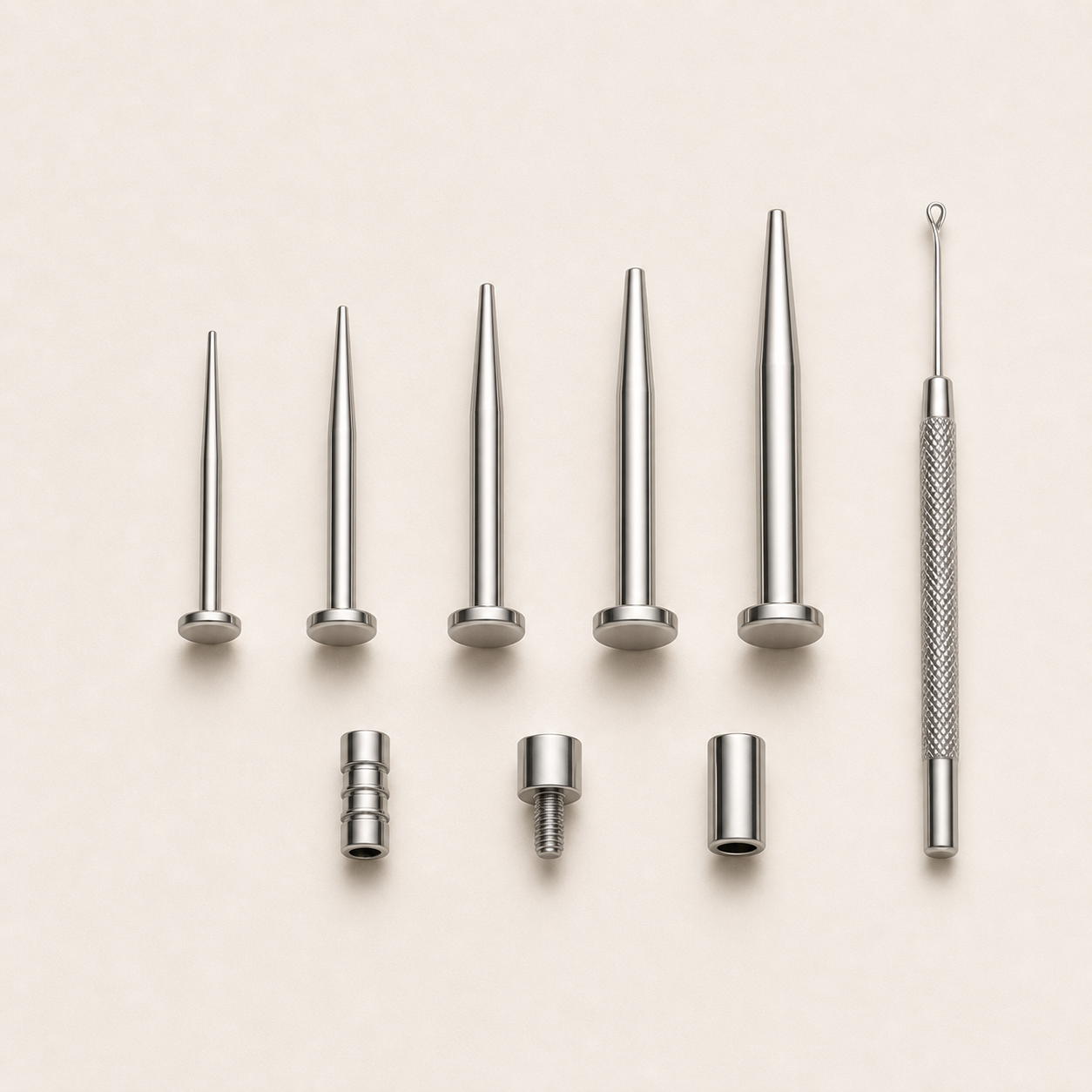
Threadless tops use a tension-fit pin. Internally threaded tops screw into a hollow post. The decorative end must be compatible with the post system and gauge.
FAQs
Can I measure while jewelry is in my ear?
You can estimate visible space, but a piercer can measure more accurately—especially for cartilage.
Should the back sit tightly?
It should sit comfortably without compressing tissue. Fit depends on placement, healing stage and anatomy.
Review the Association of Professional Piercers initial-jewelry guidance.