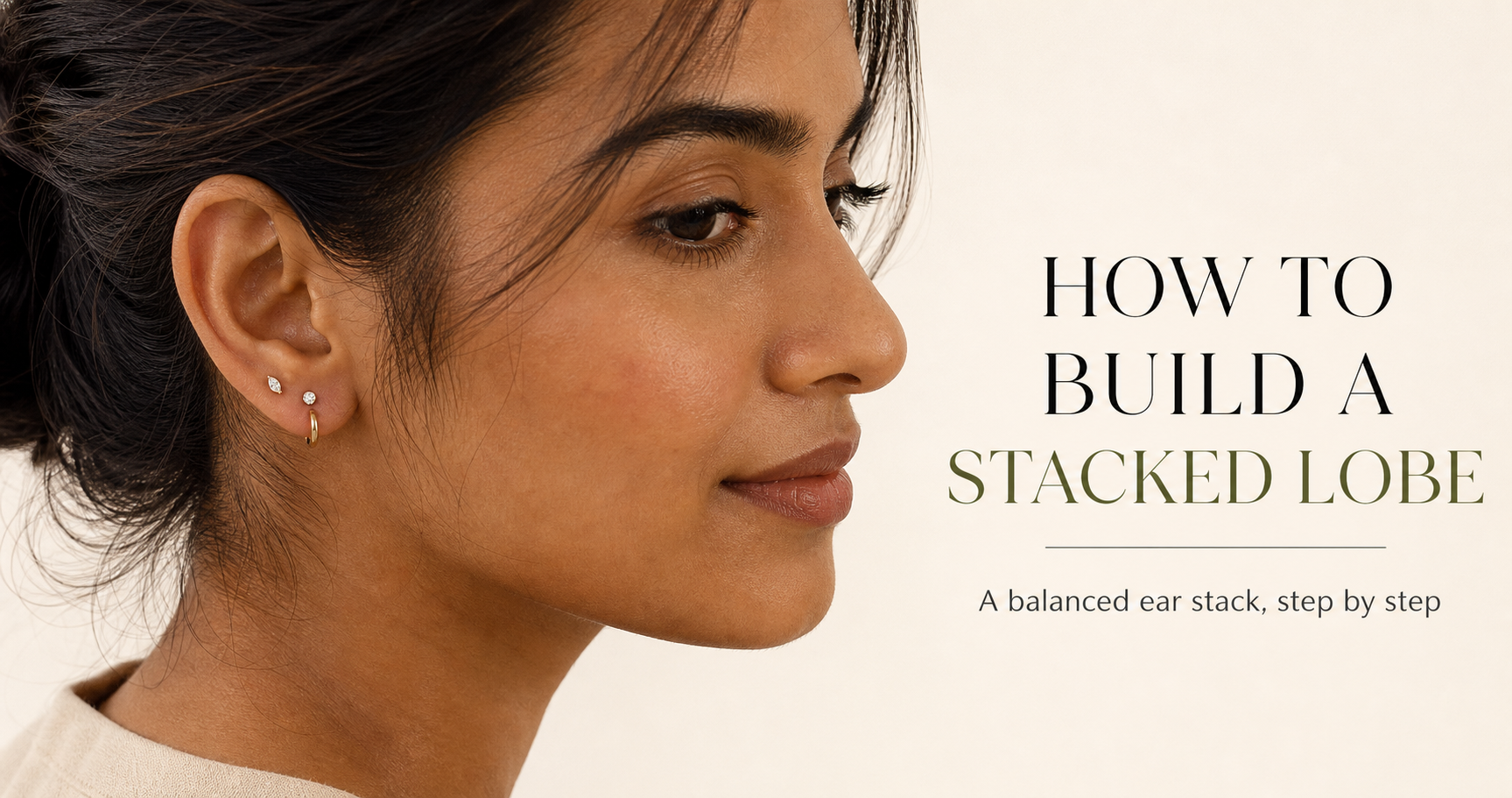
A stacked lobe can look effortless, but the best ear stacks are planned around anatomy, spacing and comfort. Whether you are adding a second lobe piercing or styling several healed piercings, this guide explains how to create a balanced look without making the ear feel crowded.
AURIVNA sensitive-skin note: Our jewelry is hypoallergenic and designed for sensitive skin. We label 925 sterling silver and titanium styles by their actual material so shoppers can choose confidently. Individual sensitivities can still vary, and a professional piercer should confirm jewelry for a fresh or actively healing piercing.
What Is a Stacked Lobe?
A stacked lobe combines two or more piercings across the soft lower part of the ear. They may follow the natural curve of the lobe, sit vertically above one another, or create an intentionally asymmetrical cluster. Browse our stacked lobe jewelry to see small studs, hoops and flatback styles designed for layering.
1. Start With Your Ear Anatomy
Every lobe has a different width, curve and attachment point. Look at the usable space between existing piercings and the outer edge. A professional piercer can mark several possible placements so you can compare the stack from the front and side. Use inspiration photos for direction, not as an exact map.
2. Choose One Focal Point
A strong stack normally has one piece that attracts the eye first. This could be a pear-shaped stud, a small cluster or a slim hoop. Keep the surrounding pieces quieter so the focal design does not compete with several equally bold shapes.
- Minimal: one tiny flatback stud plus one polished hoop.
- Sparkle: one cluster stud with two smaller stones.
- Mixed shape: combine a round stone, a marquise and a narrow huggie.
3. Create a Size Gradient
Place the largest piece at the lowest lobe position, then decrease the size as the stack moves upward. This follows the natural taper of the ear and helps multiple piercings read as one composition.
4. Leave Comfortable Spacing
Jewelry should not press into a neighboring piercing. Leave enough room for cleaning and natural movement, especially while a new piercing is healing. A piercer should assess spacing before making a new placement because swelling can temporarily change how close two pieces appear.
5. Mix Studs and Hoops Carefully
A small hoop adds movement and contrast against flat studs. Keep the diameter proportional to the lobe. If you prefer a low-profile look, use flatback studs in the upper positions and reserve the hoop for the first lobe. Explore helix jewelry and all piercing jewelry when extending a lobe stack upward.
Materials and Sensitive Ears
For a fresh piercing, jewelry quality and finish matter more than color. Ask your piercer to confirm the exact material, thread style and polish. Read our guide to piercing materials for sensitive skin.
925 sterling silver can be suitable for many healed piercings, but it can tarnish and is not our recommendation for a fresh or actively healing piercing. Titanium pieces should remain unchanged when they are already correctly labelled.
A Simple Three-Piece Formula
- Choose a small hoop or focal stud for the first lobe.
- Add a medium stone or shape for the second lobe.
- Finish with a tiny flatback stud above it.
Repeat one detail—metal color, stone shape or line direction—to make the pieces feel connected.
Stacked Lobe FAQs
Do stacked lobe piercings need to be symmetrical?
No. Asymmetry often makes an ear stack look more personal. Balance visual weight rather than matching every position.
Can I add several lobe piercings at once?
Your piercer should decide based on anatomy, health history and the number of other piercings healing at the same time.
Where can I check initial-jewelry guidance?
See the Association of Professional Piercers guidance and follow your piercer’s aftercare plan.